

beyonce age |
- Beyoncé's “Black is King”: A self-absorbed ode to “blackness” - WSWS
- Renaissance Man: An Exceptional Painter, Musician, and Filmmaker, Blitz Bazawule Counts Beyoncé, Ava DuVernay, and Oprah Winfrey Among His Collaborators - Culture Type
- Will Rumi and Sir Carter Be Featured in Future Beyoncé Songs? - Showbiz Cheat Sheet
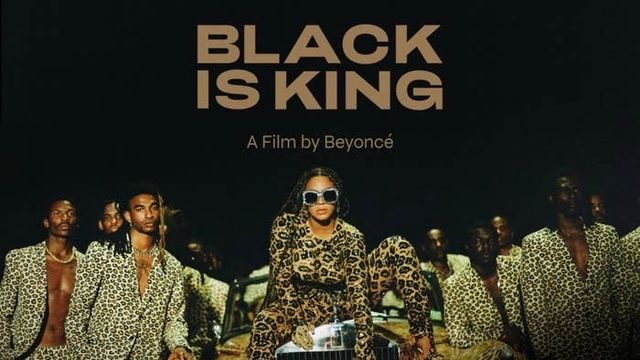
| Beyoncé's “Black is King”: A self-absorbed ode to “blackness” - WSWS Posted: 13 Sep 2020 11:06 PM PDT Beyoncé's Black is King: A self-absorbed ode to "blackness"By Nick Barrickman |
| Posted: 09 Sep 2020 10:15 AM PDT  A MOMENT IN TIME, a new series of paintings by Blitz Bazawule, is inspired by found photographs he located in markets around the world. The artist first discovered them in Rabat, Morocco, where vendors were selling albums full of old, black-and-white photographs belonging to families they didn't know. In the paintings, which are on view at Fridman Gallery in New York, Bazawule revisits the sites where the images were captured, superimposing the vintage photos on the present day spaces, in effect collapsing time, space, and memory.
"I started to ask myself, not only am I curious about the people in these photos, I am also curious about the world in which this photo was taken. That photograph represents a moment in time, but time doesn't stand still. We can hold up that photo, which is a moment in time, but that place has changed," Bazawule said in a recent Instagram Live interview. He pointed to the recent bomb blast in Lebanon, at Beirut's port, to illustrate his point. How many families have pictorial memories where the backdrops are now rubble? Bazawule was in conversation on Instagram with James Bartlett, a founder of OpenArt. An art advisory firm that aims to simplify the collecting experience, OpenArt organized the exhibition "Young Artists: One," in partnership with Fridman Gallery. The group show has brought together a diverse selection of 34 artists who vary greatly in terms of the style and subject of their work, years and level of experience, and degree of access to the system that is the art world. Works by Alteronce Gumby, Suzanne Jackson, Amani Lewis, and Al Loving are on view with works by Ambrose, Nanette Carter, Jacob Lawrence, Kerry James Marshall, Jamea Richmond Edwards, and Pamela Phatsimo Sunstrum, as well as Jerome Lagarrigue, Nate Lewis, Lorna Simpson, Purvis Young, and Bazawule, among many others. The reference to "young" in the exhibition title is not about the age of the artists, but rather focuses on what the gallery describes as "new ways in which artists are claiming their voice and proclaiming their existence in the art world." It's a particularly apt lens through which to view Ghana-born, Brooklyn-based Bazawule's multidisciplinary practice. A true renaissance man, he's making moves on the art scene and in the music and film industries. He's traveled the world as a hip-hip artist under the moniker "Blitz the Ambassador" backed by a six-piece band called the Mighty Embassy Ensemble. Chopping it up with Bartlett, who he has known for 15 years, Bazaule characterized his music. He said it's old Highlife sounds mixed with a "DJ Premier-esque" drum beat over which he raps in Twi-English. The artist said he was on a 30-city concert tour when he first encountered the found photographs.
AN ACCOMPLISHED FILMMAKER, Bazawule's highly praised magnum opus is set in Ghana, his home country. "The Burial of Kojo" is a heart-wrenching story that explores long-held tensions between two brothers and a brave little girl's determination to save one of them, her father, when he goes missing. It's about courage, rivalry, guilt, and betrayal. Music and film dovetailed on the project. Bazawule wrote, directed, and composed the score for the film. Beyond the captivating narrative, the film is shot through with beautiful imagery. A visual masterpiece, each new scene opens with a photographic image—a stunning composition with a mesmerizing color story. Throughout the lyrical film, music is often substituted for dialogue—a risky prospect that pays off. The film won Best Narrative Feature (World Cinema) at the Urbanworld Film Festival (2018), the Nile Grand Prize at the Luxor African Film Festival (2019), and was an official selection at the Pan African Film Festival (2019). The project also caught the attention of Ava DuVernay. Array, her distribution company, picked up the film and it premiered on Netflix in March 2019. When the deal was announced, DuVernay called it a "gorgeous Ghanaian gem. She wrote on Twitter: "I wanted to distribute this film from the minute I heard @BlitzAmbassador was making it. My dream came true."
The reviews are glowing. Variety said the film was "storytelling brought to gloriously vivid, lyrical life" and "one of the most exciting directorial debuts in recent memory." The New York Times said, "When musicians turn to film directing, it doesn't always work out.… But it more than works out with… this dazzling modern fable." Shadow & Act said Hollywood should sit up and pay attention:
Subsequently, the film has been screened at a selection of museums nationwide, at the Park Avenue Armory in New York during Theaster Gates's Black Artists Retreat, and at the 2019 Whitney Biennial.
WORKING ACROSS DISCIPLINES allows Bazawule to access new audiences and expand his reach. Some people are aware of him as a visual artist. Others only know him as a filmmaker. Often there is overlap, with music fans being drawn to his film work, for example. One feeds into the other, audience wise and creatively. Each medium, Bazawule said, sharpens and impacts his skills for the other. "I started as a visual artist first. I did a lot of art and then I started making music. Film has been the happy medium," he told CBS News. He recently landed a lengthy "music video" that required his film skills and benefitted from his artistic and musical experience, as well as his African background. Bazawule was one of several directors of Beyoncé's highly praised visual album "Black is King," which dropped July 31. "I had the utter privilege of being kind of the narrative director," he told Bartlett. "I got to see every piece, almost how the sausage is made. Writing the entire story. Figuring out how we were going to transfer this idea of Africa from being socialized, to think of it only from wildlife and nature, to a place of human beings who are living, who are loving, who are going through their ups and downs." A 2019 TED Fellow and 2020 Guggenheim Fellow, Bazawule directed two episodes of the TV series "Cherish the Day," the romantic drama from DuVernay. He's also booked his next big project. Last month Bazawule was tapped to direct a Warner Bros. musical film version of Alice Walker's "The Color Purple." Produced by Oprah Winfrey, Steven Spielberg, Scott Sanders, and Quincy Jones, the film is based on the Tony Award-winning Broadway musical. In 1983, Walker won a Pulitzer Prize and the National Book Award for the novel. According to Deadline, the producers saw "The Burial of Kojo" on Netflix and were moved by his visual style. "We were all blown away by Blitz's unique vision as a director and look forward to seeing how he brings the next evolution of this beloved story to life," Winfrey told Deadline.
"The Burial of Kojo" is currently streaming on Netflix. The film invokes magical realism and also draws on vivid memory, similar to the found photographs that inspired the paintings. A nexus for art, music, and film, Bazawule is essentially a storyteller. "I grew up with my grandmother's stories," Bazawule said to Bartlett. "That's the beginning of my understanding of what stories are and they were always just like that, they wove through these worlds of the real and unreal and when I was making this film, I told myself, 'If my grandmother had a camera, what kind of film would she make?'" CT "Young Artists: One," organized in partnership with OpenArt, is on view at Fridman Gallery in New York, July 7-Sept. 9, 2020, by appointment and via an online viewing room FIND MORE about Blitz Bazawule on his website (coming soon)
July 2019: TED Fellow Blitz Bazawule (aka Blitz the Ambassador) and his band the Mighty Embassy Ensemble perform three songs— "Wahala," "Make You No Forget," and "Best I Can"—at TEDSummit 2019 in Edinburgh, Scotland. | Video by TEDSummit 2019  |
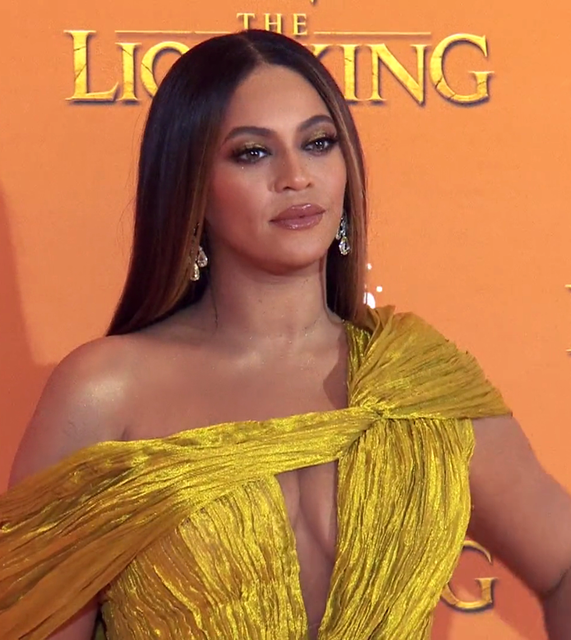
| Will Rumi and Sir Carter Be Featured in Future Beyoncé Songs? - Showbiz Cheat Sheet Posted: 23 Aug 2020 12:00 AM PDT She may be young, but Blue Ivy has already broken a few records with her mother, Beyoncé, and her music. Now, with Sir and Rumi Carter making surprise appearances in the visual album Black is King, fans wonder when it's time for these twins to step into the spotlight. Blue Ivy appeared in a number of Beyoncé's songThe eldest of the Carter children has since appeared on a number of songs created by Beyoncé and her husband, Jay-Z. Blue Ivy even gives Rumi and Sir a shoutout during the song "Boss" by The Carters. The young artist appeared as a featured artist for a number of Beyoncé's hits, including the award-winning song, "Brown Skin Girl." There's the song "Blue," which was included in Beyoncé's self-titled album. Additionally, Blue Ivy appears in the visual album featuring the music of The Lion King: The Gift, titled Black is King. That's primarily for the song "Brown Skin Girl," where Blue Ivy stands alongside Tina Knowles, Beyoncé, and Rumi Carter. With Rumi and Sir's involvement in Black is King, some wonder when, or if, the twins will step into the spotlight, like their big sister.  Will the twins ever sing with their parents?Being that Sir and Rumi Carter were born in 2017, they still are a little young to appear on a track with their mother. That's not to say Blue Ivy didn't have small roles in Beyoncé's music when she was younger. Some even expect more public appearances from the twins, Sur and Rumi. Although Blue Ivy started making public appearances when she was very young. That includes a stage moment on the MTV VMAs back in 2014. She even accompanied Beyoncé to the premiere of Disney's The Lion King. It wasn't until 2019, though, that the star-on-the-rise sang alongside her mother. That means if the twins wanted to pursue music, they would probably record songs around the same age. They still pop up periodically, though, as fans saw their birthday party in Beyoncé's annual Instagram recap video. Beyoncé dedicated 'Black is King' to her youngest sonAlthough both of the twins had small roles in Beyoncé's Black is King, the entire production aimed to empower young children. That includes Sir Carter, Beyoncé's only son. After the visual album ended, a special message appeared across the screen. "Dedicated to my son, Sir Carter," the message reads. "And to all our sons and daughters, the sun and the moon sow for you. You are the keys to the kingdom." Hopefully, fans will see more Sir and Rumi Carter appearances in the future. Until then, the photo-real adaptation of The Lion King, featuring the voice of Beyoncé, is available on Disney's streaming platform, as is the visual album, Black is King. To learn more about Disney+ and to subscribe, visit their website. RELATED: How Beyoncé Turned Disney's 'The Lion King' Into a Celebration of African Culture RELATED: Here's What We Learned About Beyoncé, Her Music, and 'The Lion King' From 'Making the Gift'  |


| You are subscribed to email updates from "beyonce age" - Google News. To stop receiving these emails, you may unsubscribe now. | Email delivery powered by Google |
| Google, 1600 Amphitheatre Parkway, Mountain View, CA 94043, United States | |
.jpg)


0 Yorumlar